USDA Rural Home Loans: 0% Down
USDA rural home loans let eligible buyers purchase with 0% down — here is how they work and how to check for free.
Advertisement
Can you really buy a home with no money down in 2026?
For many buyers in small towns and the countryside, the answer is yes — through USDA rural home loans.
This guide shows you how the USDA loan program works and how to check your eligibility for free, straight from the source.
You will learn who qualifies, how the 0% down feature actually works, and what it costs beyond the down payment.
This is for renters and first-time buyers who feel priced out of the market but live in — or would move to — a smaller community.
Here is everything you need to know before you apply, in plain language.
What a USDA Rural Home Loan Actually Is
The USDA loan is a mortgage program backed by the United States Department of Agriculture.
Its official name is the Single Family Housing Guaranteed Loan Program, and it exists to help low- and moderate-income households buy homes in eligible rural areas.
The USDA does not usually lend the money itself in this program. Instead, it guarantees a portion of the loan made by an approved private lender.
That guarantee lowers the risk for the lender, which is what makes the 0% down feature possible.
There is also a second track called the Section 502 Direct Loan, where the USDA lends directly to very-low- and low-income borrowers.
Both are real programs, and both can put homeownership within reach for people who cannot save a large down payment.
What "0% Down" Really Means
The headline feature is simple: eligible buyers can finance 100% of the home's appraised value.
That means you may not need a down payment at all to close on the house.
This is unusual. Most conventional loans expect 5% to 20% down, and even FHA loans typically require 3.5%.
For a $250,000 home, a 20% down payment is $50,000 — money most first-time buyers simply do not have sitting in the bank.
The USDA program removes that single biggest barrier for people who qualify.
That said, 0% down does not mean 0% cost. You will still have closing costs, and there are ongoing fees built into the loan, which we will cover honestly below.
Who Qualifies: The Three Main Rules
USDA loans are generous, but they are not for everyone. Eligibility comes down to three main tests.
First, the property location. The home must be in an area the USDA designates as rural or eligible, which often includes suburbs and small towns — not just remote farmland.
Second, your income. Your household income generally cannot exceed 115% of the median income for your area, and limits vary widely by county and family size.
Third, the home must be your primary residence. USDA loans are not for vacation homes, rental properties, or investment flips.
You will also need a stable, dependable income and a credit history that shows you pay your bills, though the credit bar is often more flexible than with conventional loans.
If you meet all three tests, you are in the running.
The Location Rule Is More Generous Than It Sounds
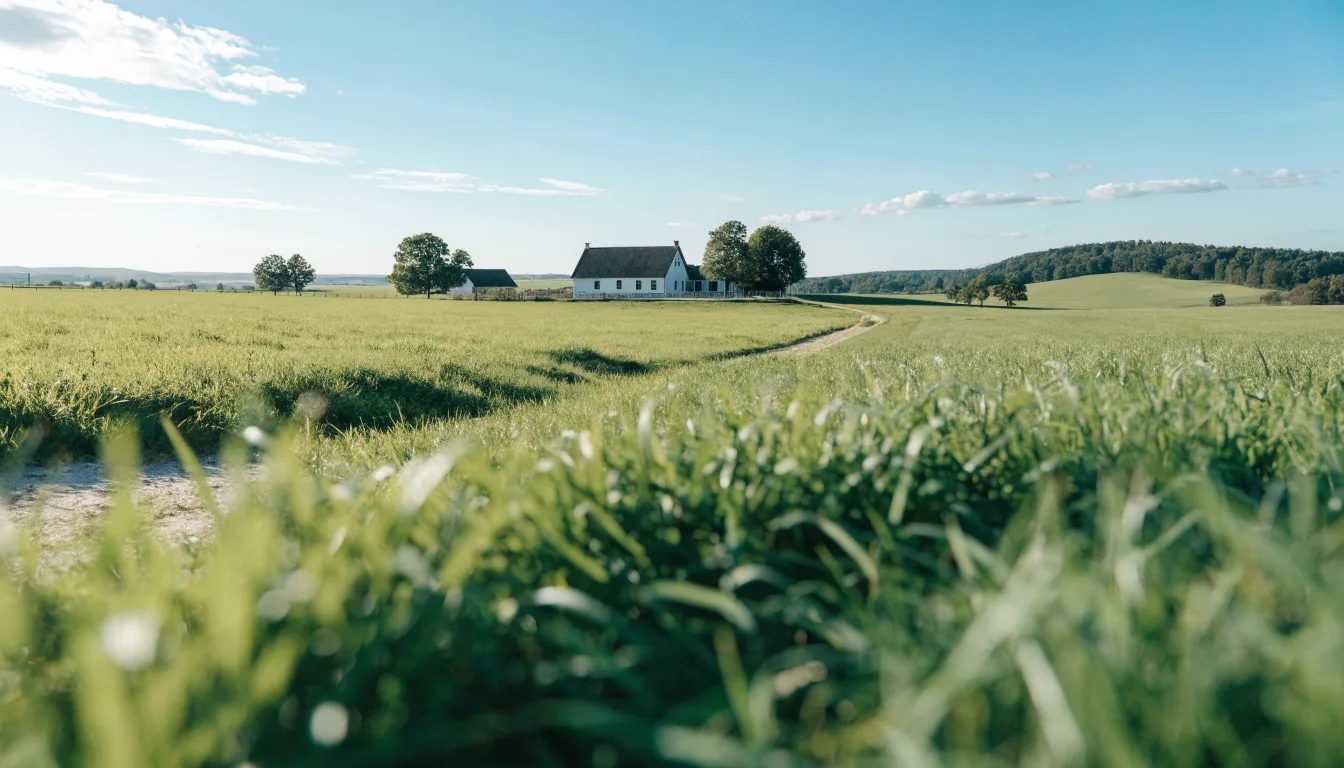
Many people assume "rural" means you have to live miles from the nearest town. That is not how the USDA defines it.
A large share of the map — including plenty of outer suburbs and mid-size towns — actually qualifies.
The USDA maintains an official property eligibility map where you can type in an address and instantly see whether it is in an eligible zone.
This is worth checking before you rule yourself out. Neighborhoods you would never call "farm country" often qualify.
Eligibility boundaries do get updated over time, so an address that qualifies today should be confirmed on the current official map.
If your target area is eligible, the location rule is cleared, and you can move on to income.
The Income Rule: Built for Modest Earners
USDA loans are aimed squarely at low- and moderate-income households, not high earners.
The general ceiling is 115% of the area median income, adjusted for how many people live in your household.
That means a family of five can usually earn more than a single person and still qualify, because the limit rises with household size.
Certain expenses — like childcare or care for a household member — can sometimes be deducted when the USDA calculates your qualifying income.
The exact dollar limits change by county and are published officially, so you should look up the figure for your specific area rather than guessing.
If your income falls under the limit for your county and family size, this test is met.
Credit and Debt: What Lenders Look For
There is no single national minimum credit score written into the guaranteed loan rules, but most approved lenders look for a score around the mid-600s.
If your score is lower, some lenders will still work with you if the rest of your file is strong.
Lenders also look at your debt-to-income ratio — how much of your monthly income already goes to debt payments.
As a general guide, they like to see your total monthly debts stay within roughly 41% of your gross monthly income, though exceptions exist.
A clean recent payment history matters. Late payments, collections, or a recent bankruptcy can slow you down.
The takeaway: you do not need perfect credit, but you do need to show you are a reliable borrower.
The Two USDA Loan Types, Side by Side
It helps to know which USDA program fits your situation.
The Guaranteed Loan is the more common path. You borrow from a private lender, the USDA backs the loan, and income limits are higher — up to that 115% of area median.
The Direct Loan (Section 502) is for very-low- and low-income applicants. Here the USDA is the actual lender, and for some borrowers it can even offer payment assistance that temporarily lowers the effective interest rate.
Direct loans often come with income limits that are lower than the guaranteed program, because they target households with the greatest need.
Both can offer no down payment for eligible buyers.
If you are not sure which one fits, the official USDA Rural Development resources walk you through the differences and point you to the right application path.
The Real Costs: Being Honest About "Free"
Zero down is real, but a USDA loan is not free of costs, and you deserve the full picture.
There is an upfront guarantee fee, which is a percentage of the loan amount. Many buyers roll this into the loan rather than paying it in cash.
There is also an annual fee, charged monthly as part of your payment, similar in spirit to mortgage insurance on other loans.
You will still have closing costs — appraisal, title, and related fees — though sellers are sometimes allowed to contribute toward them.
And of course you have the ongoing mortgage payment itself, plus property taxes and homeowners insurance.
None of this erases the value of skipping a down payment. It simply means "0% down" refers to the down payment, not to a cost-free mortgage.
USDA vs. FHA vs. Conventional: A Quick Comparison
It helps to see how USDA loans stack up against the other popular options.
A conventional loan usually asks for 5% to 20% down and rewards strong credit with better rates, but the down payment is a real hurdle for many first-time buyers.
An FHA loan lowers the barrier to 3.5% down and is forgiving on credit, which makes it popular, but you still need that cash and you pay mortgage insurance.
A USDA loan can require nothing down at all, but it locks you into eligible areas and income limits that the other two do not impose.
There is no single "best" loan — the right one depends on where you want to live, what you earn, and how much cash you have saved.
For a buyer who is comfortable in a small town or outer suburb and earns a modest income, USDA is often the cheapest way into a home.
What Kinds of Homes Qualify
The property has to be more than just in the right location — it also has to be a suitable place to live.
Most USDA loans are used to buy single-family homes, and the house must be structurally sound, safe, and sanitary.
Condominiums, some townhomes, and certain manufactured homes can qualify, provided they meet program and lender standards.
The home is generally expected to be modest in size and value for the area, without luxury features like in-ground pools counting toward the loan.
An appraisal will confirm the property meets minimum condition requirements before the loan can close.
If a home needs major repairs, it may not qualify as-is, so keep condition in mind while you shop.
Step by Step: How to Actually Apply
The process is more approachable than most people expect. Here is the typical order.
First, check the property eligibility map and confirm your income falls under your county's limit.
Second, get pre-qualified with a USDA-approved lender so you know your realistic budget.
Third, find a home in an eligible area that fits within that budget and will serve as your primary residence.
Fourth, make an offer and, once accepted, let the lender order the appraisal and process the full application.
Fifth, the loan goes through underwriting and, for guaranteed loans, USDA review before you reach closing.
Throughout, your lender guides the paperwork, but the official USDA Rural Development site is where you confirm the rules for yourself.
Where to Start: The Official USDA Source
Before you talk to any lender or agent, it is smart to confirm the program details directly from the government agency that runs it.
That way you know the eligibility maps, income limits, and program rules you are reading are accurate and current — not a sales pitch.
Tips to Strengthen Your Application
You can improve your odds before you ever fill out a form.
Pull your credit reports and clear up any errors or small unpaid balances, since a cleaner file gives lenders confidence.
Avoid opening new credit cards or financing a car in the months before you apply, because fresh debt raises your debt-to-income ratio.
Keep steady employment, as lenders like to see a consistent income history rather than frequent job changes.
Save a modest cash cushion even though no down payment is required, because it covers closing costs and shows financial stability.
Gather your pay stubs, tax returns, and bank statements early so underwriting moves quickly once you are under contract.
Small preparation now can be the difference between a smooth approval and a frustrating delay.
Common Mistakes to Avoid
A few avoidable errors trip up hopeful buyers, so keep these in mind.
Do not assume your area is ineligible. Check the official map first, because far more places qualify than most people think.
Do not confuse the guaranteed and direct programs. They have different income limits and application paths.
Do not skip the pre-qualification step. Knowing your true budget before you shop saves heartbreak later.
And do not treat "no down payment" as "no savings needed." A modest cash cushion for closing costs and moving still helps enormously.
Frequently Asked Questions
Do I have to be a farmer to get a USDA loan?
Can I really buy with zero dollars down?
Is a USDA loan only for first-time buyers?
How long does a USDA loan take to close?
What if my credit score is below the mid-600s?
Can You Use a USDA Loan More Than Once?
Yes, though the program is built around owning one primary home at a time.
Because the home must be your primary residence, you generally cannot hold two USDA-financed homes at once or use the loan for a rental.
If you sell your USDA-financed home and buy another eligible property, you can typically use the program again.
Some buyers also refinance an existing USDA loan into a new one to lower their rate, and the USDA offers streamlined refinance options for that purpose.
The key limit is intent: this is a program for people who want a home to live in, not a portfolio of investment properties.
Buying in 2026: Why This Program Still Matters
Home prices and rents have climbed in much of the country, and saving a large down payment feels harder than ever.
That is exactly why a no-down-payment program aimed at modest earners remains so valuable in 2026.
For a household that is comfortable outside the biggest cities, USDA financing can shorten the path to ownership by years, because you are not waiting to save tens of thousands of dollars first.
The trade-off is real — you accept location and income limits — but for the right buyer that trade is well worth it.
The only way to know if you are that buyer is to check the official rules and maps for yourself.
The Bottom Line
USDA rural home loans are one of the few remaining ways to buy a home in the United States with no down payment.
For low- and moderate-income buyers in eligible areas, that single feature can turn renting forever into owning within reach.
The program is real, it is run by the federal government, and checking your eligibility costs nothing.
Start by confirming the property map, income limits, and current rules at the official USDA Rural Development source before you take your next step.


